Wednesday, June 15, 2011

From limestone Georgian mansions to ancient Roman city walls...

Bailbrook Lodge

Our thoughts go out to all our family and friends caught up in this week's devastating earthquakes in Christchurch. It's just not fair!

Our days move quickly as we take to the highways and byways.

Sun 5 June is an early 4.30am start as two magpies argue on the roof outside our window. The M5 takes us directly to the delightful city of Bath, where we encounter our first real rainfall. Bailbrook Lodge, our B & B accommodation for two nights, is a beautiful but imposing four-storey country house. The bedroom is luxurious and the decor throughout lives up to its four stars.

To be in Bath is to be infused with a permanent golden glow - each and every building is created from limestone which, over hundreds of years, has aged to a wonderful golden patina. There is much to see and the weather doesn't stop us from visiting the town centre - raincoats, brollie 'n' all.

In the evening we take a short drive over a private bridge to a highly recommended restaurant - the food is wonderful but it's the bridge that captures our imagination.

The money-making toll bridge
Owned by the same family for over 107 years, we have to pay 60p each way to family members standing at the gatehouse. This is only one of two privately owned toll bridges (we think) in England, where the family collect the money as their earnings (tax free). So with around 2000 cars over the bridge a day, it adds up to a nice little yearly income!


Our riverboat the Pulteney Princess

Mon 6 June we take a leisurely boatride along a tree-lined waterway into Bath. We are hopeful for a glimpse of a resident kingfisher but only get a glimpse of its bright blue tail amongst leafy, green branches.


Two Kiwis almost ready for hibenation


We take a bus tour of the outer city and stupidly sit up the top in cold grey weather. All trussed up in jackets and hats, we get a few stares from others on the bus but we don't care - it's not obivious we are kiwis, we don't think..

In the afternoon, Max is all Bath-ed out so I take a tour of the Roman Baths for an hour or so while he seeks out a sunny place to sit and people-watch.

The Roman Baths viewed from street level
The ruins lie beneath the city and as I explore the Sacred Spring, temple and baths, I walk on ancient stone pavements and run my fingers over timeworn stone carvings and inscriptions. The baths still flow with hot water from the same source just as it did all those years ago.
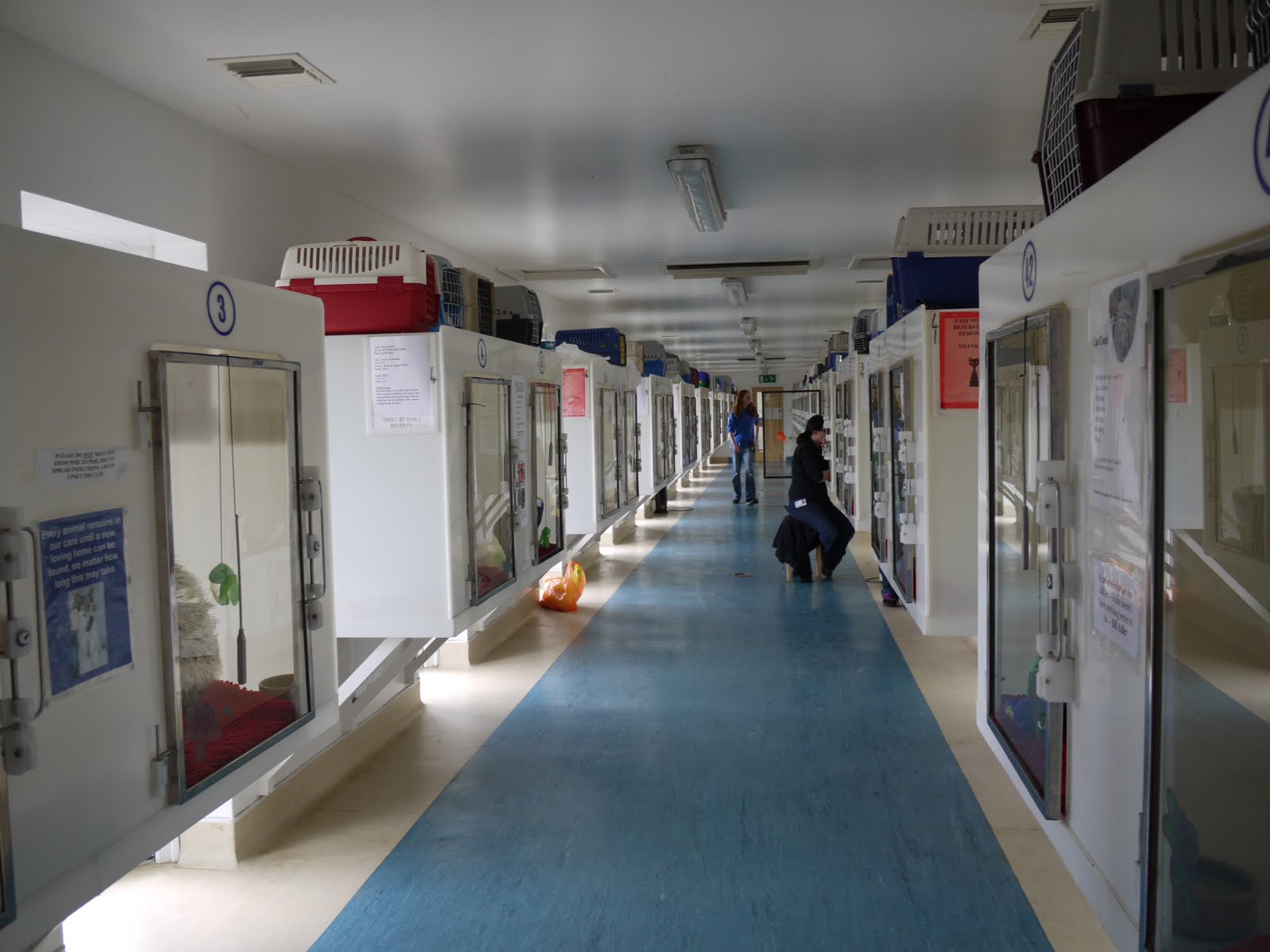


Inside the cattery. Each cat has its own apartment.
Tues 7 June starts off with a visit to the second largest animal rescue centre in England, the Bath Cat & Dog Home. We are taken on a tour of the facility by Katie Love, the events and promotions co-ordinator. It is impressive both in size, facilites and its non-destruction policy. Over 3000 animals come through the centre a year and its costs over 2.5 million to operate annually. The centre has 55 permanent staff and 500 volunteers. Impressive, indeed!

 
The cooling towers loom in the
background


Our next destination for two days is Meadow Inn & Steakhouse (another medieval building) B & B in Ironbridge, which we discover sits across the river from a coal-fired power station and four gigantic brick cooling towers.


Ironbridge with its steeply angle pitch in the
centre of the bridge

Ironbridge is said to be where the Industrial Revolution started and is, of course, where we find the world's first iron-cast bridge with its 'soaring arches and graceful lines'.


The Roman Townhouse built by modern builders
using historic building methods


Weds 8 June we spend the day visiting the Wroxeter Roman City ruins and view a recently built Roman townhouse . We visit Shewsbury, another delightful medieval village, and then the ruins of Wenlock Priory (a medieval monastry) at Much Wenlock. We are finally all 'abby-ed' out and return to Ironbridge.


Topiaried bushes sculptured into animal shapes of
squirrels, mice and birds adds interest to
the Wenlock Priory ruins


For some reason, we are always first at in-house restaurants - perhaps because we are kiwis and hungry from our adventures - all that walking!


Thurs 9 June our destination is Heswall, where we will stay put for 15 days. Traveling for two solid weeks catches up with us, we still have colds but look forward to a break and staying in our friend Grant's flat. We are gratefulfor the space and a chance to catch up with some washing and unpacking our bags to let our gear breathe. We enjoy a lovely meal with Grant and his partner, Maddie.

Frid 10 June we get our bearings in Heswall. Our flat is on the main road and we have shops beneath us - one, a boutique wine shop, advertises NZ wine.

Max & Grant outside the castle
Grant's leg is in plaster, so he has time to guide us on a tour of the Wirral which is a peninsula which is surrounded on three side by three bodies of water - the River Mersey, the Irish Sea and the River Dee. We visit Hoylake  at the end of the peninsula and view the vast stretches of sand (the tide is out for several miles) and the large wind turbines that sit out at sea.

Sat 11 June with Grant again as our guide we take a drive to northern Wales (we are just minutes from the border which runs down the middle of the River Dee). We travel the motorway and pass several castles and a couple of dead badgers on the roadside (very sad).

We visit Conwy, a delightful seaside village with an old castle guarding entrance. Max and I walk the castle walls but refrain from paying to walk inside the castle. Conwy is also home to the 'smallest house in Britain'. Known as the Quay House, I pay L1 and squeeze (mind your head) through the front door, while Max and Grant watch with amusement.

The smallest house in Great Britain
is very small indeed!
The little red house measures just 3.5m by 1.8m and is a 'one up, one down' home, meaning one room downstairs complete with stove, bench seat and table, and one room upstairs with room for a small bed and bedside table. Apparently, it was once owned and lived until 1900 in by Robert Jones, a 6ft fisherman who couldn't fully stand up in it. It is still owned by his descendants.

The little Welsh lady at the door ,dressed in full Welsh costume, tells me of another village which boasts the smallest church. Max and Grant are not convinced. Perhaps another day! We drive home via Llandudno, Wales' largest resort and a popular holiday spot with older people, so we are told.


The low tide in Conwy leaves these fishing boats
high and dry


Sun 12 June we finally say goodbye to our little rental car and we deliver it to the Liverpool airport back to its rental accommodation. With Grant as my guide, I negotiate the M53 and Liverpool city while Max follows in Grant's car. We arrive safely after only one or two wrong turns, detours and backtracks. I'm on my second anti-histamine in 24 hours so nothing fazes me, meanwhile Max stresses out when we shoot past the last petrol station before the airport.

Back in Heswall, the day draws in and is cold and wet...

Mon 13 June we wake to the news of Christchurch's earthquakes and make contact with family and friends. Even though we are miles away, we still feel the stress of the situation. Later in the day, we take a map and discover the start of the Wirral Way, an old rail trail/cycle/walkers route. We also enjoy a walk through the Heswall Dales, where we discover that gorse plays an important part in the rehabilitation of wildlife in the area. We can't help thinking that back home, it would be sprayed and killed off - not protected!

Old buildings were restored in Victorian times

Tues 14 June we take a drive to neighbouring town, Chester. We find this to be very busy and tourist orientated but we enjoy the walled city (over 77,000 people live here) with its wide streets, medieval buildings, upmarket shops and the huge Chester Cathedral.


It's a brilliantly sunny and warm day so we walk for 45 minutes on the stone wall which circles the inner city and share our lunch with pigeons outside the gothic-looking cathedral.


Chester Cathedral


The historic city of Chester was founded by the Romans in AD79 and was built on the River Dee, where the water once lapped against the city's stone walls. Over the years, much of the River Dee has silted and where ships once roamed, now wildlife live amongst protected marshlands. It's hard to imagine the water this close to the inner city.
One of the many towers on the wall

Sunday, June 12, 2011

A birds eye view down towards the bay and info centre
 from where the castle once stood - there were many
steps to climb
Friday 3 June our destination today is Tintagel Castle and then the West Country Inn near Clovelly.

The ruins of Tintagel Castle sit on a steep and rugged headland (also called an island) that juts out into the Cornish sea. The castle, built in the 13th century, was supposedly linked with the legendary King Arthur - legend or not, no-one knows for sure. But amongst the castle ruins, an earlier settlement was discovered dating back to the 5-7th centuries.

Eating Cornish icecream
It's a steep walk down to the centre and tearooms before walking up countless, jagged steps to the wind-swept cliff tops.  The day is sunny with a warm gentle breeze in our faces - perfect for this outing! We take time to appreciate our surroundings and imagine what it would have been like to live here in what would have been harsh conditions. We tentatively negotiate the clifftops, taking care to stay back from the edges before carefully retracing our way back down the precarious stone steps and then back up the hill, Cornish icecream in hand, to the village above.

The inn (apparently haunted so I have since found out) sits on the edge of the Bursdon moor and is close to the rugged coastline. In the evening, we take a recommended drive down to Welcombe Mouth.


Narrow lanes are everywhere
 The four mile drive is not without adventure. The narrow country lanes leading to the bay lead to even narrower lanes where there is barely six inches (metrics rarely used over here) to spare on either side of the car. Luckily, we follow a small van as it races down the steep 20% incline - other cars are forced to back up for us.

The stony bay is known for its excellent surfing and we suspect the van driver is checking out the surf as he doesn't stay long. It's a lovely piece of paradise but is disappointingly spoilt by the rubbish left and washed ashore. Two large black and white birds, possibly gannets, lie lifeless amongst the rubbish with blue and orange twine entangled in their bodies. Back at the carpark, we see a pile of rubbish around a sign. Sadly, people here don't care. It is something we see everywhere we go - from cities to countryside - man-made waste strewn everywhere.

Back at the inn, it's kareoke night!

Sat 4 June sees us enjoying a slow and lazy start to the day. We take a short walk across the nearby moor and discover the tiniest spotted orchid we have ever seen. Late morning we set our sights on Clovelly.

View of Clovelly from the quay
Clovelly is everything you (Sybil & Vicki) said it was - a gorgeous little village that tumbles down a steep hillside to a deep blue harbour. Whitewashed cottages with slate roofs, colourful pots of flowers, cobblestone lanes and donkeys give this real-life working seaside village a special olde-worlde charm of its own. Clovelly has been privately owned by the same family since 1738.

Steep little walkways amongst the cottages
could be explored...
It's a beautiful day as we explore the shops, admire the houses and gardens and little lanes. The quay is the perfect place to enjoy a wine and beer and watch people on the shore (the tide is out) and others, such as a wedding party, trying to negotiate the cobblestones with ridiculously high heels. Vehicles are banned from the village and for years donkeys and sleds have been used for taking goods up and down the steep hill. The donkeys, now retired, are still a popular attraction for the visitors.

We also enjoy meeting a retired local, as he leans on the balcony and watches the visitors. He tells us he's lived here for 20 years and has seen the sea spray up to 30 feet over the quay during a wild spring tide. We try to imagine the tide surging against the sea walls just feet below his balcony. We are lucky to have two encounters with a bird handler and meet a kestrel and a barn owl.

We are lucky to have yet another
beautiful day
We are pleased we don't have to haul a sledge back up the hill.


High heels do not work well on
cobblestones


Monday, June 6, 2011

Going to where the 'sea meets sky'...

Weds 1 June we take a walk downtown, Bornemouth, through the gardens and to the beach. We meet a local who rents one of the little beach huts each year and brings his grandchildren down for memorable days at the beach. They cost L90 a week to rent and have a 12-year waiting list.

This beach has sand (whereas Brighton beach is stoney) which is 'combed' of rubbish each morning to make it pristine for holidaymakers. The atmosphere here is relaxed and nowhere near as crowded.

We decide this is much nicer than Brighton, we would definitely come again!

On the road again and we discover a delightful little village called Lyme Regis. This is another holiday resort but it has a lively, holiday atmosphere with typical narrow streets and shops of a seaside village that stretch up a small steep hill. Music wafts up the hill and shop windows are bulging with exciting gastronimical delights - meat pasties, pastries, scones, cupcakes, fresh vegetables - a sensual feast all on display!

Torquay, a seaside mecca for yachties, is our destination and Fairways B&B our accomodation. Fairways is top notch and the owner Chris welcoming. After exploring Torquay by foot we head out to Ashburton to meet our next homesit family. After a mix up with the address number - we have to knock on doors and ask to use a computer to look up the address again - we finally find the house. Anna, Ian, Isaac, and Angus live in a small historic three-storeyed home with three chickens, three guinea pigs and three rats - all well-loved and cared for. After a lovely meal, we tour the village. We look forward to our homesit here in August!


Cottington

Thurs 2 June we visit an historic village called Cockington with quaint thatched roofed cottages, gift shops, horse-drawn carriage, working art galleries, restaurants, a walled organic vege garden and a pretty rose garden, where you are instantly overwhelmed by a heady mix of perfumes when you walk though the arched doorway. It's peaceful and we enjoy this interlude before we continue a haphazard journey to Penzance in Cornwall.

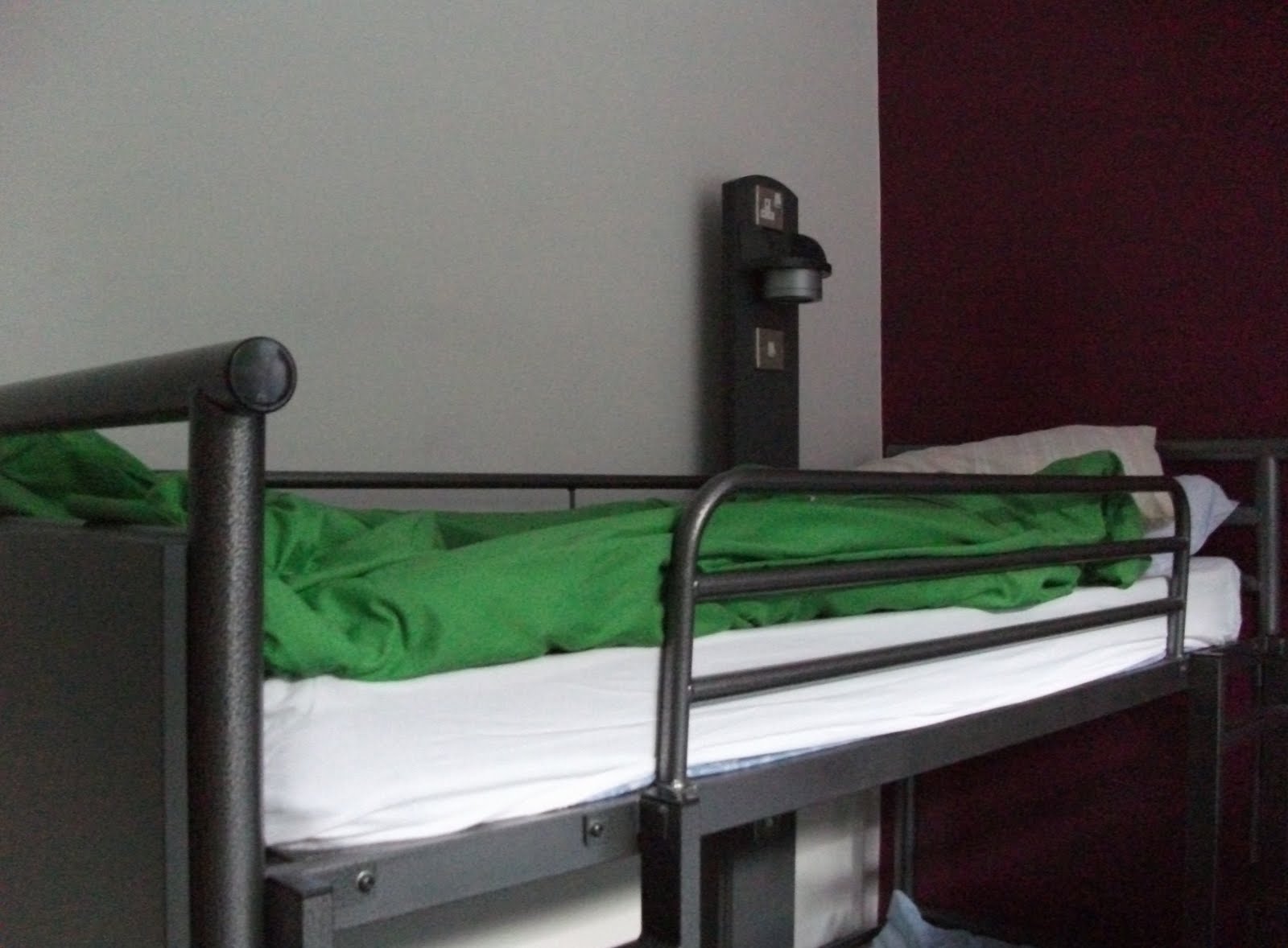
It's our first night in a YHA (only L10 each!) and this one, Castle Hornock YHA, is a wonderful, old but restored country manor. It's big, with spacious grounds for tents, and has been refurbished with travellers in mind. We sleep in separate dormatories and both score top bunks.


Top shelf sleeping for the Maddisons!

Each bed has a docking station complete with a reading light, an electrical plug and a little shelf. We both have good sleeps and are up early-ish but in the dark find it almost impossible to read our lock combinations to clear our lockers. Note: always take a torch/lamp and never ever put anything in a (rustling) plastic bag (far too noisy when trying to be quiet) when overnighting at YHAs.

In the evening, we drive out to Land's End (the southern most tip of England) but it's too cold to do anything but take a quick photo. We find Minack Theatre (a unique ampitheatre on the cliff face) but there's show on and it's booked out so we head back to the YHA and settle in for the night.

Sunday, June 5, 2011

Mon 30th May we follow the coast to Brighton. We travel through a few small villages and once away from the sea's edge we stop inland at Iklesham to visit our first UK car boot sale. There are many bargains to be had here - books, kid's toys, clothes, antiques, and lots of fresh strawberries. Max is not so keen so we don't stay long as I would like. A quick coffee break on Eastbourne's pier and we are then winding our way through pretty, green pastures and hills laced with mist. We find driving on narrow English country roads to be intense and tiring.


We are pleased to reach our destination - Brighton - but this is a holiday mecca for tourists and locals alike and is bumper-to-bumper busy along the shorefront. Our (bargain) hotel does not offer parking (groan). We find a parking building with a L20 fee for 24 hours.


We walk through crowded streets to find the Royal Pavilion - a lavish regency palace built by King George lV, who quite obviously enjoyed the good things in life including Indian architecture and Chinese decor. We listen to an audio as we walk from room to room but are both quite unprepared for the opulence of the Banqueting Room - its rich decor (colour, design and expense) so obviously designed to impress the king's guests.

The beautifully set table (ready for a king's feast) sits beneath an impressive light weighing one ton and hanging 30 ft from the mouth of an elaborate dragon at the ceiling. Each room stuns our senses in every way from the bold use of colour with elaborate paintings and embroidery textures to the intricate woodwork and plush carpets underfoot.


Late afternoon, a light misty rain showers us as we make our way through narrow cobbled walkways known as The Lanes - each strung with colourful bulbs and lined with eateries, boutique shops and pubs. We enjoy a Ploughman's Platter and try a plate of mini English pies. Mmmm, good!


Tues 31 May we are sooo..so lucky to get a parking voucher for 75% off and it only costs L5 for the night. We are also pleased to see the rear end of Brighton, bulging with people and cars, and head for Netley Abbey.

The abbey is the most complete surviving Cisterian monestry in southern England and sits in a peaceful clearing surrounded by tall whispering trees. Towering walls watch over us as we wander from each grassy room to another taking in its majestic oldness. 

The monestry was eventually converted into the mansion house of Sir William Paulet, then eventually deserted. These slowly crumbling 13th century stone monastic walls and archways were once inspirational muse to many a historical writer, artist and poet, and were affectionately known as the 'romantic ruins'.

Max amongst the 'romantic ruins'

We continue on to Bournemouth, where we stay overnight at Meyrick Park Lodge & Golfcourse. After the busy-ness of Brighton, we enjoy peaceful park-like surroundings and a swim before dinner! Bliss.

In other's footsteps of greatness we will go...

Sat 28 May our mobile journey begins and is just the beginning of a new love/hate relationship with English roads and our navigator, TomTom.

Jane's simple writing desk
Chawton, in Hampshire, is the original 17th century home of England's Jane Austin, where she completed her most famous novels - Pride & Prejudice, Emma, Mansfield Park, etc. It is exciting to walk in her footsteps as we wander around a delightful cottage garden that Jane, her mother and sister once enjoyed. The home is sparcely furnished and as we walk from room to room, we take in the simplicity of the lifestyle they once endured. Jane's simple little table and chair that she dedicated to her daily task of writing is both inspiring and humbling. She didn't need a big desk or a computer! Amazingly, even Max enjoys this delightful interlude.

The Austen's house and garden in Chawton
The M25 takes us straight to Dover - it's not my preferred highway (it's fast and furious) but we get there quickly and safely. This is to be our first experience of a B&B - The Norman Guesthouse - the owners are friendly and welcoming, and the room small but nicely decorated. We have to share a toilet and bathroom.

Dover reminds us of Picton and Lyttelton in NZ. There are a few places to eat but they're not easy to find. And of those available, you can have almost anything with chips and peas!

 
At the gunnery with the regimental barracks
 in the background
Sun 29 May introduces us to a full English breakfast - cereal, sausages, bacon, fried eggs, baked beans, tomatoes, toast, fruit juice and coffee. It's a perfect start to our steep walk up to Dover Castle. It's cold and windy with a sea haze that comes and goes. Max takes over my spare red beanie and, like Where's Wally, I can spot him a mile away.

Dover Castle sits above the spectacular white cliffs and was originally built as a medieval fortress by King Henry ll and then later used during World War ll and the Cold War as a defence base.

View from the castle tower overlooking the
port of Dover
We take a guided tour through the Secret Wartime Tunnels - a maze of corridors that, on the first level, were used as a hospital during the war. We experience an audio that follows the arrival of an injured Mosquito fighter pilot as he is stabilised and then operated on. We smell the disinfectant from the operating room, the oldness of the equipment, the cooking in the kitchens as we move from room to room. We see the tiny bunks used by army staff, mostly women, and experience blackouts and the sounds of bombing. We don't know if the pilot survives or not.

17th century life reconstructed inside the King's keep

We take a mini tour-ride to get our bearings then visit displays in the Great Tower (or Keep) where King Henry ll once ruled and lived with all his cronies. The chambers have all been recreated as he would have lived in the 17th century. We climb endless spiral steps that lead to the tower and, in a blowing gale, look down on the town and port of Dover. We also explore medieval tunnels only to discover that they lead to nowhere and that we have to climb hundreds of steps back up again. A reasonable amount of fitness makes these escapades bearable.

The white cliffs stand guard over the busy port
After an hour's rest, late afternoon, and a refuel with chocolate and orange juice, we head off (in the car) to walk across the tops of the white cliffs. It's windy and the sea mist still lingers but it's exuberating to stand high above the port and sea trying to imagine what it was like during the war with the drumming of fighter planes in the skies above and when 3/4 of Dover's homes were destroyed.


A lucky shot of the people-shy Exmoor
We very naughtily write our names on the post in natural chalk (it'll wash off in the next rain) and I try to photograph the wild/shy Exmoor ponies that graze nearby.

Friday, May 27, 2011

In royal company are we...

Weds May 25 our day starts with a hearty breakfast of bacon, eggs, tomato, toast and coffee. A big day out is planned, one that requires some dedicated physical effort on our part.


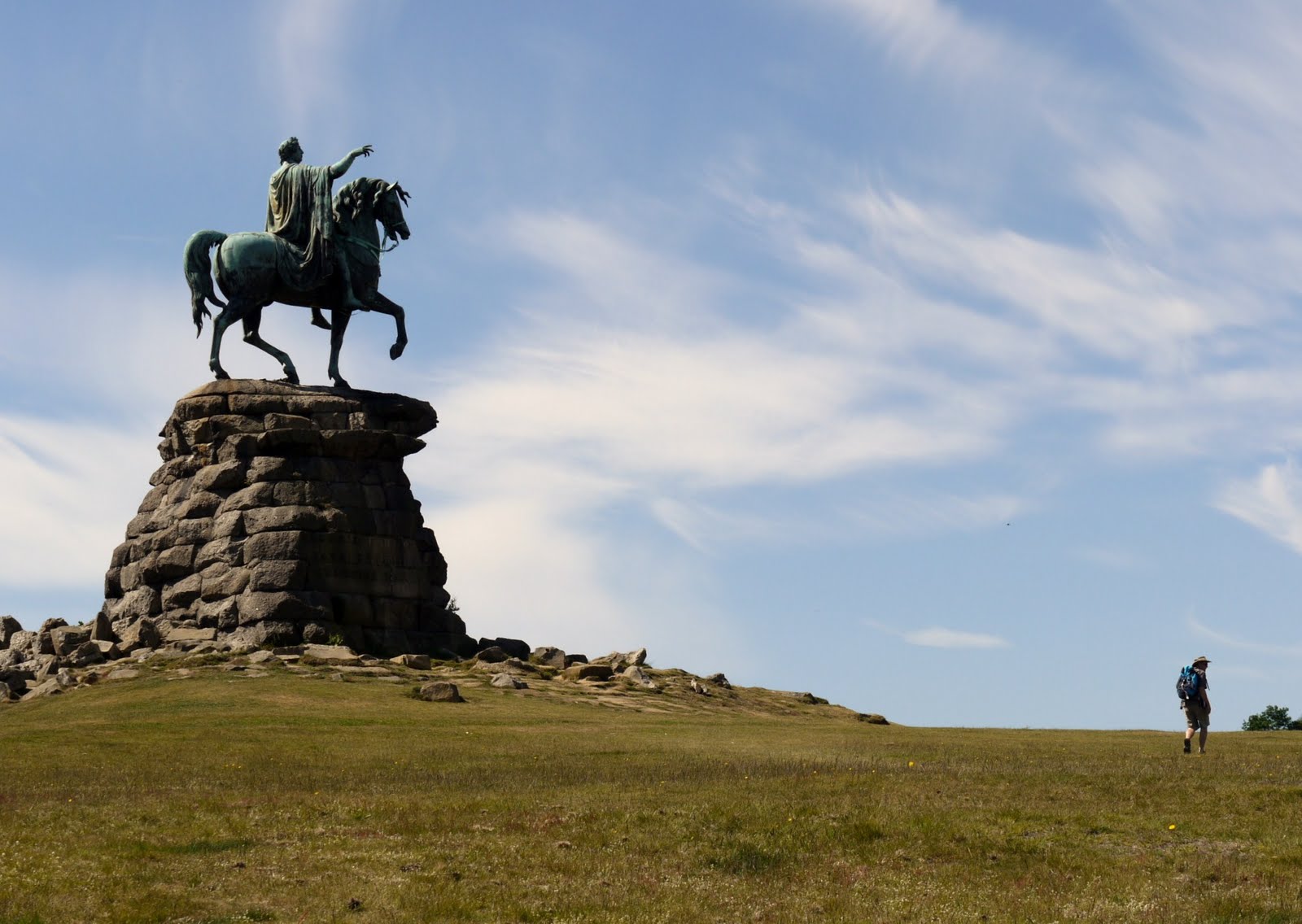
The Statue of George III makes Max, on the
bottom right, look tiny

We walk from Virginia Water, located at the bottom of the Windsor Great Park, to Windsor Castle, some 12 kilometers or so. There are some signs in the park but not many tell us we are moving in the right direction. We stop a young man driving a small motorised garden cart to ask directions. Are you sure you want to walk there, he asks. Yes, we do, we reassure him. Well, it's a long way, he replies, shaking his head as if he thinks we are mad. He points us in the right direction.


The Long Walk, only three miles away
(over four kilometers)
We follow paths through the trees and shrubs past Savill Garden, up a hill, and through some big gates into a deer park. A rider on horseback passes us and we see another in the distance. It feels llike we've been walking for miles until, finally, we come to the huge bronze Statue of George III. We take a rest and are small beneath this magnificent monument. Deer gaze at us lazily from a distance and two big hares bounce across the grass below us.

Nearly there... the castle gates in our sights
From here we look straight down the Long Walk to Windsor Castle and, yes, it is a long straight walk to the castle gates, three miles to be exact. It takes us another 45 minutes to reach the gates where we stop and take a breath to see just how far we've come.

Windsor Castle is the oldest and largest lived-in castle in the world and has been home to British royalty for over 900 years. After putting our backpacks through security, we take a tour with a guide to get a general overview and background. The castle is not as crowded with tourists as the Tower of London and, therefore, is more relaxed.

The moat around the Round Tower,
 which now houses royal archives 
We follow on with a self guided tour that takes us to view Queen Mary's Doll's House (built in 1923 to a scale of 1:12) which is perfect in every minute detail (a little or big girl's dream doll's house). It once even had running water to its bathrooms. Max loves the line-up of model vintage Rolls Royce cars in the underground garage.

Ropes guide us through to the Drawings Gallery, where an exhibition is on display to celebrate Prince Philip's 90th birthday.

Then up the grand staircase to the State Apartments, which are a combination of formal rooms and museum-like exhibits. We see opulence here, from kings and queens of old, and marvel at nearly everything we see, taking in the gold detail that appears on everything, creating a truly lavish effect.

Two of the Queen's men as they march
their way back to their quarters 
We walk through King and Queen's bed chambers, dressing rooms, dining rooms, drawing rooms, the Queen's Audience Chamber and the Garter Throne Room, where the new Knights of the Order of the Garter are invested. We see old paintings by the masters, illustrative Gobelin tapestries hung on walls, and on vaulted ceilings, we see beautiful scenes with cherubs painted by Antonio Verrio. We are not allowed to take photographs.

St George's Chapel is impressive too and is the place of worship for the Knights of the Order of the Garter. Kings and queens are also buried in the vaults under our feet.

We enjoy the visual beauty of this castle and knowing that it is the official residence of the Queen and Prince Charles makes it special.

St George's Chapel on the left


This part of the castle is closed to visitors
and is the Queens private living quarters


Our cute little London Cab

We decide to catch a bus back to Virginia Water but at L8 for only half the trip (then a change of bus and a final kilometer or two walk home), our driver advises us to take a cab - it is not only quicker but delivers us to the door.

Frid May 28 we collect our hire car. Hurray! We have our own wheels! It's a Kia Ceed, a nifty little car, that runs on petrol (the man at Hertz tells us it's a diesel). We hope it's economical.

We also go hardware shopping with Sophie and Chris to buy a battery operated drill/screwdriver, nails etc, so Max can create a special timber roof inside Fergus' big indoor cage. He also builds a scarecrow to keep the crows out of the chicken yard. Dressed in a bright red jacket, jeans and cap, the scarecrow sort of works, for now at least.

Soon we'll be on our way to the white cliffs of Dover!