Tuesday, September 20, 2011

Part 4: In pursuit of great writers, lochs, whisky, wildcats and love… Scotland

INVERNESS Thurs 8.  We are on our way to Inverness, travelling through the Highlands towards Loch Ness.

We stop for lunch in the middle of the hills and mountains of Glenmoriston and get our first close glimpse of a Highland Coo (cow).

Unfortunately, the little herd is not interested in being photographed so I only get a pic of one curious little fellow.

We tell the café owners that these ‘coos’ are almost as scarce as hens teeth – we haven’t seen many at all!

Our travels take us around and along the shores of Loch Ness. Nessy is nowhere to be seen – apparently she was getting her hair done!


We do, however, find Urquhart Castle along the way and stop to have a look. It’s an impressive site and was once one of Scotland’s largest castles. It’s had a bloody past with battles over its ownership and hosted noble families – the Durwards, MacDonalds and the Grants.

We walk up its remaining intact tower and enjoy views of the loch. When we return to the info centre, we watch a short movie about the history of the castle and are impressed by the curtain opening and showing an impressive view of the castle – we realise we should have done this before we walked the site.

Just a small sample of the miles of trenches
that make up Fort George
On to Inverness and the YHA. Our room is on the corner of the building and we are within walking distance to the town centre.

The next day, we take a drive out to Fort George, but the cold day and my under-the-weather health and bitter cold wind sees us just visiting the info centre.


Inverness, known as the Capital of the Highlands, is home to 65,000 people.

In the afternoon, we take in the city, visiting the Victorian Market and the infamous Leakey’s Bookshop.

The bookshop is stacked with second hand books - from floor to second floor ceiling. I love books but I'm not fond of the smell of old books...


The Inverness Castle is impressive and watches over the city and River Ness.

We visit the museum and learn about the history of the area as well as seeing 'stuffed' wild animals which include a red fox, some badgers and a sea eagle.

Whenever we read about the history of Scotland, we are amazed by the blood thirsty-ness of its past – its battles and wars over land. The local people we meet, however, are kind and friendly – thank goodness!

We discover some of Inverness' beautiful historic buildings
such as H. Dunbar's Hospital, built originally in 1668 for the poor,
and later as a Grammar School until 1792.   


Monday, September 19, 2011

Part 3: In pursuit of great writers, lochs, whisky, wildcats and love… Scotland

Snow poles line the roads - we imagine
deep snow falls through this area...
 OBAN Mon 5.  Our drive to Oban takes us around the shores of Loch Lomond, opposite to the hill we walked the day before.

It’s a big lake with scenery that reminds us of home – tall sloping hills and mountains, and wide roads.

We also start to recognise place, road and river names that take us directly back to our own birthplace of Invercargill, Southland, NZ. Clyde, Dee, Esk, Spey, Glengarry, and many more as we travel, take us straight home. We love the Scottish accent too.

We travel toward the Argyll and Bute district, through valleys and hills planted with extensive forestry plantations.


Oban is a port town with two big Caledonian MacBrayne ferries that travel daily across to the Isle of Mull and out to the Western Isles. Our plan for the next day is to take a trip to the Isle of Mull and on to the little island of Iona.

Full of the flu...
Our YHA is in a lovely big old building, which to our delight has just been refurbished. Unfortunately, I have come down with the flu – sore throat and massive head cold. We manage to secure a double room instead of being in the dorm – it’s in the older part but we are told we will be in the new building the second night.

The next morning we wake to cold miserable weather – it’s blowing a gale and wet, wet, wet. And I am feeling worse but if the trip is on, I’m off! It’s not.

There is an amber alert which means the weather is foul and the boats can be cancelled at any time.


View from our window...

We are told that we may get to the Isle of Mull but no promises that we will get back to the mainland again and we hear that the little ferry to Iona is canceled. So we decide to stay put, rug up, store all our gear back in the car, and take the short walk into the village.

It’s so windy, my umbrella blows inside out and breaks in two.

Max attempts to fix the umbrella... Raincoat, warm hat
and umbrella is a must while travelling in Scotland.

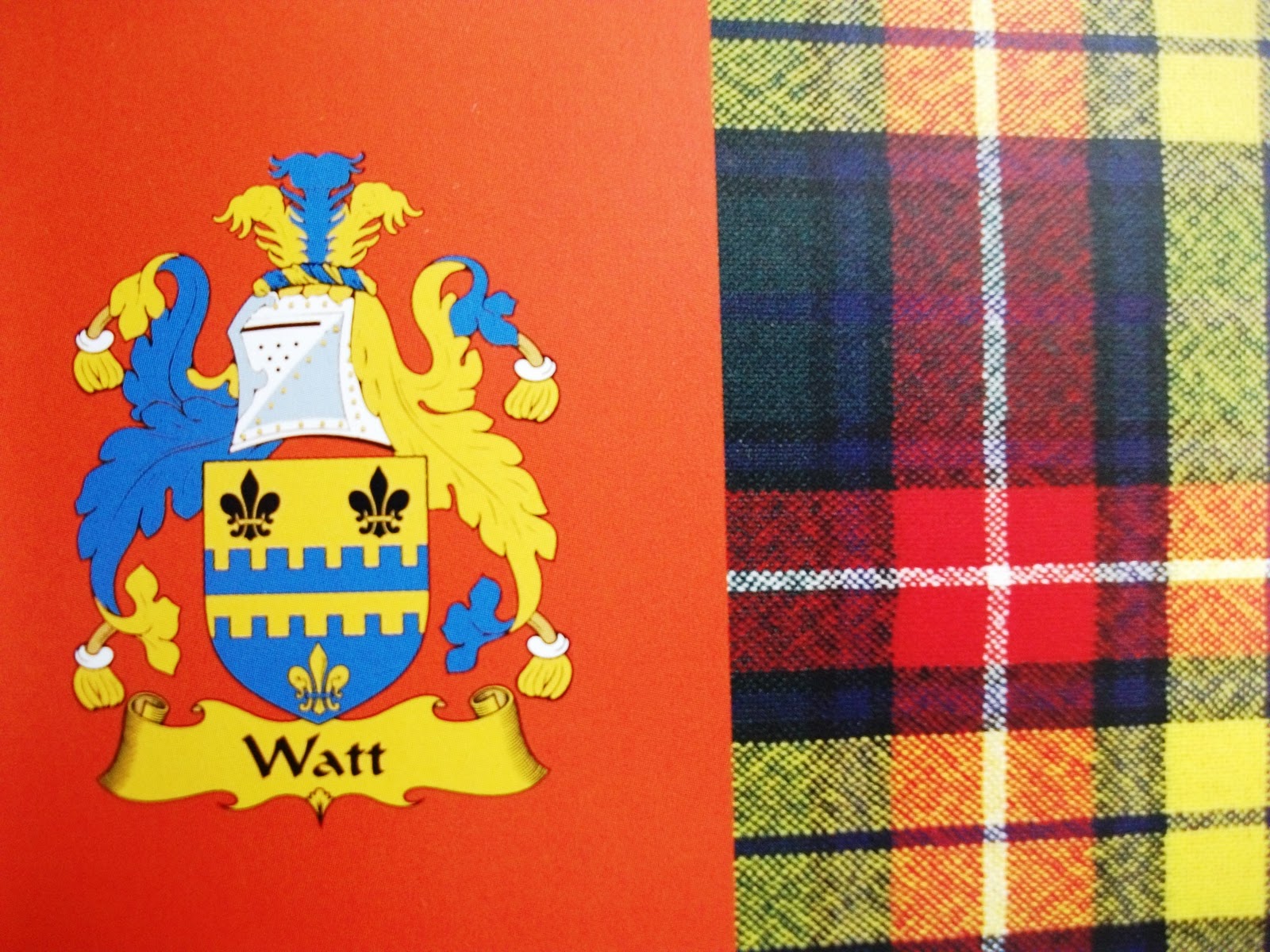
We explore the shops, intrigued by the various tartans and Scottish souvenirs. I have an exciting family find, coming across a little booklet – The Origins of the Watts and their Place in History! Our motto is ‘by fidelity and confidence’ and our crest is ‘a falcon, hooded and belled’. A Watt can also wear the Buchanan Tartan.

Some YHAs shut you out during the day when they're cleaning but thankfully, the Oban YHA allow us to hang out in the lounge until our room is ready.

The new room gives us a stormy view of the bay where we watch the waves roll in and the ferry come in.

Simon, the assistant manager, kindly makes me a lemon, honey and ginger drink to help my cold. Very sweet - the drink is ok too!


ISLE OF SKYE
Weds 7.  After a good breakfast at the YHA, cooked by Simon, we pack our bags again, and head off for the Isle of Skye in the West Highlands.


Our destination is Uig, a remote village on the north-west coast of Skye. We travel through hilly mountainsides draped in green velvet, vast forest plantations, and acres of heather that create a pink/purple haze across the landscape.


Ribbons of water cascade down hillsides, carving deep crevices into the earth as it tumbles over rocks into fast moving streams. It rains on and off. We drive around the sea lochs as they reach inland and the road curls up and over hills taking us to the outer coast.


Stopping briefly at Fort William, where B & Bs line the road leading into the village, we take a coffee break and meet two young people (a Kiwi & an Aussie), who are based in London. They both have colds!

We cross the expansive and curved (like a rainbow) Sky Bridge and venture on to Uig.

Uig is a small sheltered bay on the north-west side of Skye. It has many ancient sites and is a port for ferries to Lochmaddy and Tarbert.

Uig is often warm and dry when it’s raining down south. Unfortunately, we arrived on a day that is cold, windy and wet. The YHA does not open until 5pm so we head to the village pub and console ourselves with a drink.

By the time we are cooking our evening meal there is quite a collection of people in the hostel – it’s busy for such a remote place! Our room is basic but comfortable.

The view from the hostel is stunning. It sits high above the bay and gives a good view of the windswept hill-scape dotted with white washed cottages. And we watch the ferry come and go.


After a reasonable night’s sleep, and still rough weather, we decide to forgo another night’s stay and head off to Inverness.


Before we leave the Isle of Skye, we have an important place to visit –Taliskers Whisky Distillery. This is for Jared. We take a tour through the distillery with an excellent guide who takes us on an animated journey of the production of whisky.

At the end we have a tasting – a new whisky called 57 North – Taliskers are located at 57deg North, the whisky is 57 percent and Max was born in ’57 so felt he should give it a try.

I take a quick sip, hoping it will help my raging sore throat – yes, it helps, a little!


One of the few thatched roofs we have seen in Scotland,
too wet no doubt... notice the rocks hanging from the
eaves to keep the roof in place...

Sunday, September 18, 2011

Part 2: In pursuit of great writers, lochs, whisky, wildcats and love… Scotland

GLASGOW Sat 3 Our departure from the Lakes District is wet and dismal – it’s disappointing because we drive through some beautiful valleys and mountains – all blanketed in heavy mist.
 
On our way to Glasgow we  notice a change in landscape - gone are the hedgerows, small fields and stone fences instead large fields, wide roads and more grazing stock.

We are staying with Sheila and Gibson in their home in the West End of Glasgow. We have never met them before (Max teaches with their son, Rod, at Hillmorton) but we needn’t have worried - they are friendly, kind folk and immediately make us feel very welcome.

In the early evening, Sheila and Gibson take us for a walk around the area which helps us get our bearings – to local parks where we get views of the city, along the River Clyde, the stunning Victorian Kibble Palace glasshouse in the Botanic Gardens, and the University of Glasgow.


The River Clyde
We stop at a favourite pub where Max tries his first local Scottish beer.

We have a lovely meal, cooked by Sheila, and evening before retiring to our bedroom where we find a huge map of the UK on the wall. I locate Glasgow and give Max a pinch on the arm.

Can you believe it, I say, we are in Scotland - we’ve come all this way from England, how exciting is that? Together we trace our fingers over the towns we plan to visit – still a long way to go.


The next day we drop Gibson off at the airport – he is off to New Zealand to catch up with Rod and follow the World Cup. Sheila drives us 40 minutes out of Glasgow to Loch Lomond where we will walk up a ‘wee’ hill. Conic Hill, at Balmaha, looks like a small mountain to us at 361 metres but we are prepared with our boots and jackets.

Sheila and Gibson are avid mountain walkers and have tackled most hills and mountains in Scotland, so we are in good hands.

After a coffee, we take to the main track to begin with before Sheila leads us up a less travelled path – it’s steep in places and we grapple with heather and rocks to steady ourselves but are rewarded with less people and magnificent 360 deg views at the top.


Conic Hill forms part of the Highland Boundary Fault which separates the Highlands from the Lowlands. We can see most of Loch Lomond and the surrounding countryside. It is truly magical.

Our descent also takes a detour down to the lake shore (the bonnie, bonnie banks of Loch Lomond) for even more views and vistas.


We finish with a visit to the visitor centre – we feel pretty good after our climb and feel lucky to have had such a unique experience.

But it doesn’t stop there. Back home we shower and change then head off to catch a train into Glasgow City.


Our short train journey takes us to the East End where the Commonwealth Games will eventually take place. The streets are quiet here, some buildings with broken windows and unloved – not a place we'd want to be late at night.

It’s a short walk into the city centre and we find the perfect place to have an evening meal in the Merchant City building.
 
When we finally emerge, it’s raining but we head towards the George Square taking in the city sights as we go.


George Square is home to the magnificent City Chambers – a grand and imposing building that overlooks many statues including one of the famous inventor James Watt – unfortunately, I didn’t know this until days later.

We catch the train home and fall into our beds – thanks to Sheila and Gibson and their wonderful hospitality (and delicious breakfasts), we have had the most wonderful and best kind of experience of Glasgow – with locals and new friends…


Saturday, September 17, 2011

In pursuit of great writers, lochs, whisky, wildcats and love… Scotland Part 1

THE LAKES DISTRICT Thurs 1 Sept.  It is with great excitement that we are back on the road again in our rental – a Kia Cede Estate 1.6 Diesel 6-speed. It’s a new journey that will take us to the Lakes District in Cumbria and then over the Scottish border. We are told that we will feel homesick when we get to Scotland, so we are keen to find out why.

The YHA in the town of Ambleside is our destination and sits at the top end of Lake Windermere. Windermere is the largest of the lakes and lies in a long and narrow valley created by glaciers long ago in the Ice Age.  We join the lake at its southern most end, Lakeside, where it runs into the River Leven and winds its way out to the Irish Sea.

It’s an unbelievably hot day as we stop first at Lakeside for lunch and then wind our way around the lake towards Ambleside. Autumn has just arrived here in the Lakes District – tones of gold and red are just visible throughout the landscape.

The YHA is a stunning building right on the edge of the lake with the bonus of free parking and its own bar and restaurant. Built in 1894 as four small hotels, it is a maze of rooms and corridors. Our room is small but overlooks the lake and includes a bunk bed (a one up and one down) and a chair – it’s simple but comfortable.

We are close to the wharf and within easy walking distance to the town centre.

Once a market town, Ambleside is now a tourist town with its distinctive local grey, stone buildings and dozens of outdoor adventure stores (all with sales on) selling everything you could possibly need to explore the nearby mountain range and lakes. The town is a gateway for walkers and mountaineers.

We explore the town on foot and even manage to find a bike shop. Always happy to inspect a new bike shop, Max gives this town the Thumbs Up.


Potted floral displays add charm and colour to this delightful little alpine-style village.
 
No matter where we go in England, the Romans have been before us – on a walk we discover the remains of Galava Roman Fort not far from the hostel – not much left!


And a kissing gate that requires...well...a kiss!


Sadly, our hot and sunny day gives way to cold, grey skies and rain the next day. We plan a day on the lake with a trip on the passenger boat Tern to Bowness where we change boat and take the Teal to Lakeside.
At Lakeside, Max catches a bus to the Lakeside Motor Museum at Newby Bridge, while I stay behind and visit the Aquarium.


Max enjoys displays of pedal cars and the Donald Campbell Bluebird exhibition, while I enjoy watching the antics of otters and marmoset monkeys as well as coming face to face with piranha fish. I also learn that house mice don’t like the smell of vanilla and strawberry scented candles – a bit of info that might be useful someday!

Before we leave the district we have just one more visit – we head to the home of a great writer of children’s books – Beatrix Potter.

It’s a wet and windy drive around the lake to Hill Top farm. We arrive half an hour early and just a handful of people are waiting to buy their ‘timed’ tickets. We line up in rain, sheltering under umbrellas and are first to get our entry tickets when the office opens. It’s a short walk up the road, through a garden gate, to the shop, garden and house. Again we stand in the rain waiting for the house to open.


The house has been left exactly as Beatrix Potter lived (as she stipulated it should be), including her hat hanging at the fireside and the hob-nail clogs that she used to wear. It’s dark and almost gloomy inside – there is no artificial lighting, no gimmicks, no information boards – it is just as it was all those years ago. We get a glimpse into Beatrix’s life, where she spent many a day writing her beloved animal stories. Her books are placed strategically around the house with pages open showing a particular drawing – from this we can look about the room and see where her inspiration came from.

Beatrix was not only a talented writer and artist, she was a farmer, a conservationist, and naturalist – she made detailed drawings and studies of fungi. Over the years, Beatrix bought large areas of land and then donated much it to the National Trust. She also worked hard to preserve the quaint old cottages and continue the breeding of Herdwick sheep in the area.

When it’s time to leave, we find the carpark full to overflowing; such is the pull of this famous lady!

The Lakes District was also home to another great writer, poet William Wordsworth, who penned many of his greatest poems while living in Dove Cottage in Grasmere.

It’s a privilege to experience the homes and areas that inspired these amazing people, to see the landscape that spurred them to put their thoughts on paper…


As we leave the Beatrix Potter home, Max quietly points to the field beside the garden and there we see two little wild rabbits nibbling on the grass – Peter, perhaps, and Cottontail?

Saturday, August 27, 2011

Lasting impressions...

The Dartmoor, without a doubt, has had a huge impact on our stay in Devon. We've explored it on foot, by car and bike, and still we experienced just a small part of it. We've been romanced by its history, lured and seduced by its landscape and wildlife. 


Low growing western gorse and heather make a beautiful and
spectacular colour combination on the Dartmoor


The Dartmoor ponies, in particular, hold a special appeal for me, taking me back to my younger days (aged 10-12) when I fervently read every English-based 'Jill' pony book I could get my hands on. Now the lanes, the cottages, and countryside I once read about all become clear.


The Dartmoor ponies are an important part of the landscape. Archaeological digs found that descendants of these ponies roamed the moors around 3500 years ago. Today, ponies on the moor are likely to be a mix of 'native' Dartmoor and Shetland. They, along with 'Scotch' sheep and various breeds of cattle, help with conservation grazing, keeping the pastures and vegetation in check.


We are amazed at how placid these ponies are when it comes to tourists with cars and cameras. We even find some are very cheeky - pushing there muzzles in through open car windows, looking for a tidbit. We also learn that it is illegal to feed the ponies. 


This is fine with Max as he shoos away a pony that tries to steal his lunch - just a little too close for his comfort.


Below are some of the inhabitants of the moor...


Autumn has somehow sneaked up on us. When we first arrived in Ashburton, the evenings were drawn out - daylight until nearly 10pm (half past nine before the hens were ready to go to their cozy bed) and the days were warm. Now the evenings have closed in and the days are often wet and cold - darkness descending upon us by 8.30ish.


It's our final few days of our homesit in Ashburton and this particular day we take in the last of the sun's rays by moving the outdoor chairs into the sun before it disappears over the hill.

It's late afternoon, we each have our novels, something to drink, cheese, olives, and a handful of Pringles chips, as we soak up the warmth. Then Max declares he'd like to go for a walk. Let's go up the Terrace path, I suggest, we could even take our books.

So off we go, books in hand and, of course two cameras. The Terrace path basks in sunlight as this little town slowly succumbs to the shadows. We find a bench seat luxuriating in the sun and make ourselves comfortable, leaning against each other for support.

It's a glorious spot, overlooking the outer parts of Ashburton, rolling hills and farmland. The late afternoon sun beats down on us warming our bodies and our hearts. A light breeze appears out of nowhere and plays with our books, pulling and tugging at the pages.

From below, we hear familiar sounds, all unseen: a rooster crows from the farm directly below us and then another replies from across the valley; children shout while at play in their backyards; a dog gives an intruder bark to a passerby; the clip clop of a horse's hooves as it trots along the lane; the see-saw drone of a lawnmower; a tractor as it chugs its way across a field; the raucous 'crawk' of the crows; the soft croon of the doves; and the gentle shushing sound of the breeze as it rushes through the trees nearby. All this, as the sun casts long, finger-like shadows across the green patchwork of pastures and the Dartmoor becomes a blue-grey silhouette against the sky.


It's been an amazing five weeks, living in another family's home and caring for their pets. We have had an insight into others' lives. Staying in a 300 year-old house is an experience, one where we learn to live with all its idosyncrasies and to appreciate its past. It's a good reminder that we are, afterall, just caretakers of these wonderful old buildings.


We have gained insight, too, into the lives of the little animals we have cared for and got to discover their individual characters and quirky natures.

But it is now time to move on. The next stage of our journey takes us to Scotland...


It's just a little pony, Max...