Saturday, August 20, 2011

Flags, flowers and history in the towns of Devon...

Our base in Ashburton is perfect for exploring the towns of Devon. Each town has its own inner beauty and local attractions. 

English towns suffer from the same problems that New Zealand towns do. Smaller towns and villages must find ways to keep their communities alive, using history, specialised businesses or industry to attract people. Ashburton is a mecca for antiques and is well known for its boutique shops. It has just won a  fight against a supermarket chain from setting up on it's boundaries - a victory for the survival of small businesses here. 

One thing that stands out in both England, and France, is the picturesque floral decorations in their towns. Flowers in baskets, flowers on windowsills, huge towers with tiers of flowers - petunias are popular, geraniums and pansies too. All lending their bright and beautiful colours to make these towns attractive to visitors. Pubs are especially good at providing an attractive floral facade. 

These are a few of the towns we've visited: Torquay, Newton Abbot, Exeter, Oakhampton, Tavistock and ....


Totnes: Here we visit our first A & P show one sunday afternoon. It's a reasonable day out - a good part of it spent waiting, with hundreds of others, in traffic to reach the grounds. It's a typical country show - people and animals everywhere. A voice booms over the loudspeaker - a horse and gig driving display in this ring; a dog race in that ring; Jacobs sheep, which Max describes in colours vanilla, chocolate and caramel, in those pens; rabbits in this tent; poultry in that tent; and don't forget the craft tent and the wild bird display!


This barn owl is much bigger than it looks,
just under two feet high!


Totnes, the second oldest borough in England, is delightful. It's small town centre offers alternative-style shopping with an abundance of art, health, and organic food shops, plus a big outdoor market every Friday. 


Totnes is also home to Norman Castle, which towers above the town on its steep mound

Young hopefuls wait for the crabs to bite...
Salcombe: This quaint seafaring town tumbles down the hill to a tiny, narrow shopping area and harbour. Salcombe is a popular resort for holidaymakers and those with a passion for all things boating & sea related. Fishing for crabs is a favourite past-time for kids and their adults. We watch as lines are lowered into the water with rotting bacon tied to the end to tempt the cautious crustaceans. 


Dartmouth: Another seaside town, a pretty little port, which is home to the Dartmouth Castle and the Britannia Royal Naval College. Unfortunately, it's a little late in the day and we stop only for a  coffee. 


Teignmouth: On suggestion from a friend, Neil, we visit one of Devon's oldest seaside resorts. Big waves crash on the award winning sandy Town Beach.  An old Victorian pier still stands and is a focal point. A quick peer into the amusement arcade tells us that its Victorian-style leisure activities have long been forgotten in exchange for modern technology. Colourful beach huts line the Point towards the estuary and along Back Beach, boats line up on the sand. 


Art trail: Butterflies made from recycled CDs
We try crab sandwiches and, shelter under umbrellas (it's raining again) as we explore the streets and wander along the waterfront, following an art trail as we go.

Brixham: A charming fishing port with colour-washed houses stacked neatly around it's hills. A statue of Prince William of Orange guards the Quay. It was in this little port that the prince first set foot in England - he later became King William III. It's a Thursday and Pirate Day - pirate  music, games, and dress-ups gives this pretty seaside resort a fun and festive atmosphere. Combined with a sunny day (becoming a little rare these days), it's a lovely outing.


Bovey Tracey: A Dartmoor village, Bovey Tracey is small but what it lacks in size, it makes up in floral decorations. The village centre is a pretty and colourful sight for visitors. Here we visit the The House Of Marbles, an extraordinary museum and studio housed in an old pottery factory. It's completely free to visit and park, and even has a cafe. We spend over an hour here, glossing over all the different types and sizes of marbles, reminiscing about old times when we had our own marbles as kids. There's also a glass blowing studio and a pottery museum.

Moretonhampstead & Chagford: Both Dartmoor villages lie in some of the most beautiful English countryside we have seen. Rolling green hills and valleys with roadsides full of summer's bounty with flowering hemlock, golden rod, tansy, Queen Anne's Lace, and aster to name just a few. Stone walls crisscross the land and thatched cottages suddenly appear out of nowhere.


Chagford is charming and based around it's small square and the distinctive octagenal 'Pepper Pot' Market House. We discover two of the most amazing, well- stocked hardware shops we have ever seen, here in the middle of nowhere! James Bowden and Webbers stand side by side and both are full of everything you could possibly need - farm clothing ( an entire room dedicated to gumboots) tools, kitchenware, sports equipment, and so much more. 
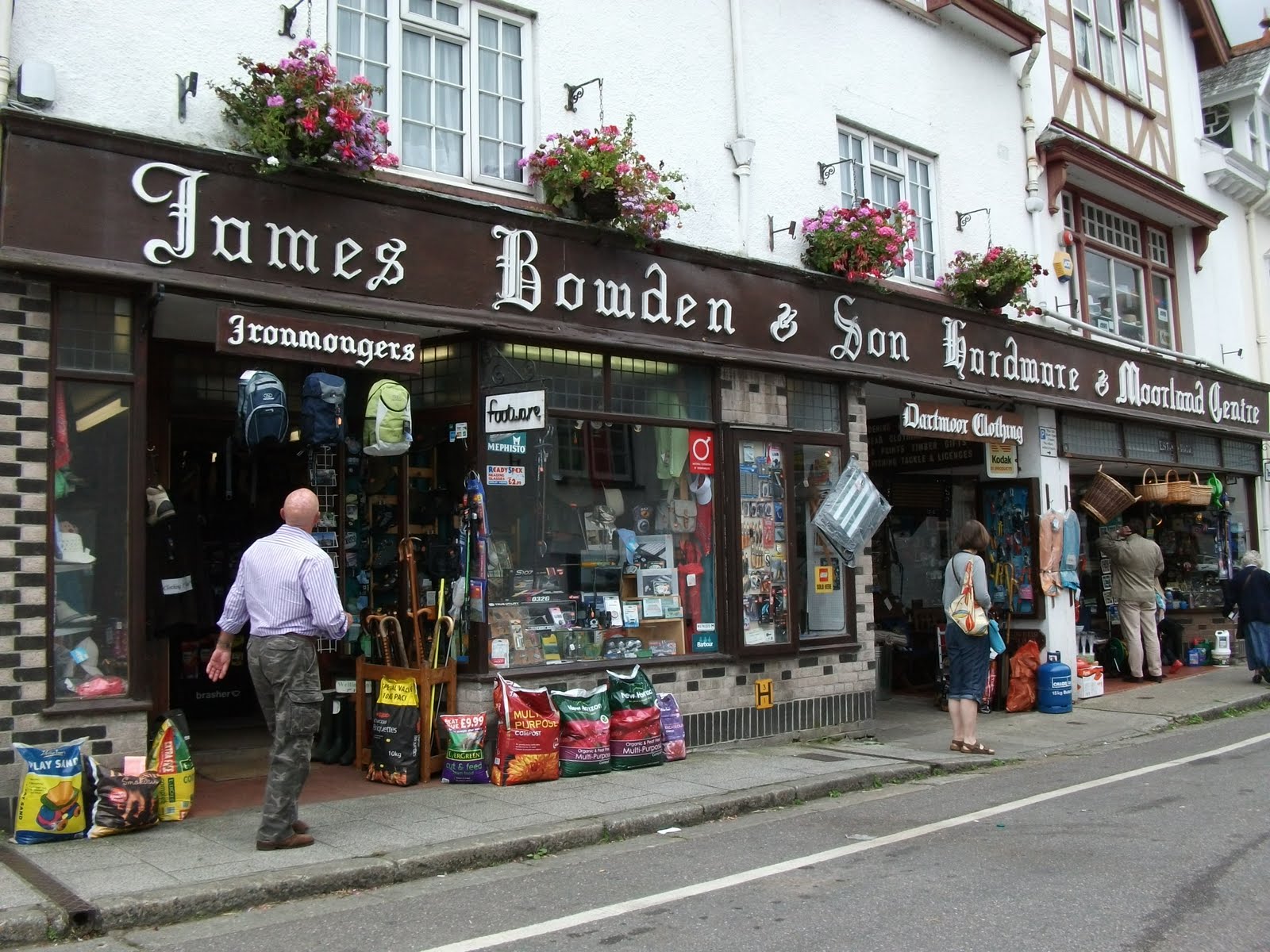

Each shop is like a cavern and reaches far back into the building. Up little stairways, we discover secret rooms, to the left and right, all full of stock. It's a magical find and we learn that these two shops are famous and bring visitors from afar.


Princeton: At 1300 feet above sea level, Princeton is the highest town on the Dartmoor. It is famous for it's ties with Sir Arthur Conan's novel, Hounds of the Baskervilles, and for its Dartmoor Prison. The prison is an austere and forbidding looking collection of stone buildings - prisoners must have thought and perhaps still do think that they've been sent to another world - such is the isolation and drab landscape of the area. After being shown around the area by young man whose surname was Baskerville, Sir Arthur Conan Doyle's mind got to work and the first few lines of hi famous novel were written while he stayed at Princeton. We visit the prison museum but neither of us are inspired to buy any prison momentoes - if anything it's mildy depressing and we are pleased to leave and find a nice stream to have our picnic lunch.


Widecombe in the Moor: A delightful little moor village not far from Ashburton. After driving through winding roads to reach it, we are surprised to find it bustling with visitors and a couple of tourist buses tucked into its carpark. 


There are at least three little shops dedicated to souvenirs, a pub, two cafes, a visitor centre, a church (the Church of St Pancras, also known as the Cathedral of the Moor) and a handful of houses.


Buckfast: This tiny village is home to the Benedictine monks in Buckfast Abbey, a living monastery  in a truly peaceful setting. Here we enjoy strolling through the gardens, viewing an art exhibition and browsing in the three shops - gifts, books and a monastic produce shop. The produce comes from monasteries and convents from throughout Europe. We buy a jar of French creamed honey  - yumm, and some French perfume - all made by monks or nuns.


Plymouth: The Flavour Fest is on when we visit this large seaside town. Brightly coloured stalls offering all types of yummy food is on offer. We share a spicy sausage wrapped in a bun and some delicious Thai. We explore Drake Circus, a huge shopping centre with everything you could possibly want. A walk up through gardens takes us to the Plymouth Hoe where we view the entrance to the harbour and overlook the newly restored Tinside Lido, a seaside salt water swimming pool. 


We continue our walk around the bay to the Barbican, Plymouth's historic port. Here we find the wharf busy with yachts and people taking part in the 2011 Fastnet Race, sponsored by Rolex. It's a hive of activity and yachts all sizes.


Without the use of our trusty Renault Scenic, we would not have been able to discover the heartland of Devon - its wonderful towns and its crowning jewel, the Dartmoor. A big thank you to our homesit hosts, Anna, Ian, Isaac and Angus, for loaning us their car.



Moorish pursuits...

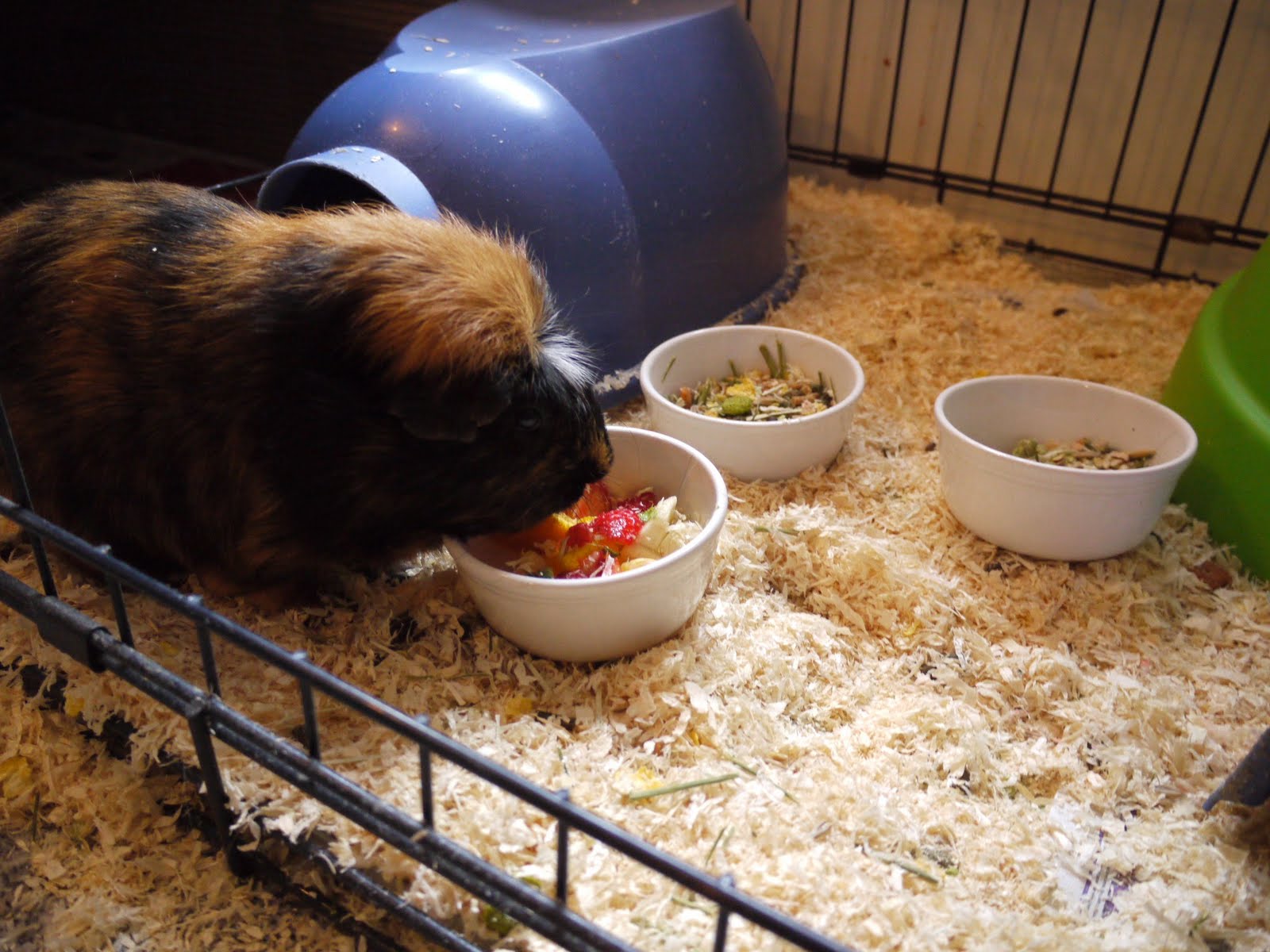
Each day we settle into the routine of letting the hens (two Sidney Silkies, one Bantam and two bigger hens - one black and one brown - all named) out by 8.30 in the morning, checking their water bowl, and giving them their daily rations of wheat and corn mix; checking in on the rats to see what they have been up to overnight and then checking the guinea pigs - refreshing their water and chopping up a little gourmet breakfast of carrot, corn, red capsicum, apple or orange and then topped with a handful of parsley. 

The little pigs munch into theirs with great relish while the rats come out to see what's on offer and then one (the oldest) will grab a tidbit and rush off down the ramps to the bottom of the cage and into a plastic tunnel to munch away in private or store it away for an afternoon snack.

It is with a great burst of energy that we venture out on the bikes to explore the Dartmoor for the first time. Little do we realise how high the moor is and how steep the lanes become, rising hundreds of metres above sea level. With map in hand and an outline of our destination, we set out for Buckland in the Moor. It doesn't look too far on the map and we decide we will do a round trip through Widecombe in the Moor and come back to Ashburton. 


We pedal up Bowden Hill, behind Ashburton, and past Lavender House Hotel, a nondescript building - not the cute lavender encased cottage that I had imagined. We wind our way through narrow stone-banked lanes, watching out for traffic from both front and behind - ready to dismount at a moments notice if a massive tractor or vehicle should suddenly appear around a blind bend. A crossroads of sorts takes us onto a wider road but starts to climb rather steeply. I manage to stay on my bike as we rise above the village though avenues of tall, leafy trees. 

Needing a breather, I make an excuse to photograph the valley below and scramble up a bank to a fence line only to be stopped in my tracks when I actually lay eyes on my first fox. 


Sadly, this fox is in a very bad state of decomposition - I clearly see the remains of its furry red body and its once cunning jaw of teeth. I imagine that it has been hit by a car and crawled up this bank to die or perhaps some ruthless farmer had tossed its dead carcass or injured body up off the road out of the way. 


Not everyone here likes foxes. It is illegal to hunt foxes and kill them but from I poster I see recently of a fox savagely torn to pieces by hunting dogs, it still continues. Animal rights groups do their best to bring an awareness to locals and visitors alike to protect this little animal from its human predators. Needless to say, I have readily donated to their cause.

We continue up the hill through dappled sun and twitching shadows that reach across the road. Finally, I get off and push my bike when the gradient reaches something around 20% or more. Once at the top, we then find ourselves sailing downhill in a short-lived euphoria - with me oblivious to the fact that I will have to pedal back up again. Max loves the hills, whereas I endure them but am secretly pleased I have developed some good muscle tone over the last few months with all our walking. 


We wind our way, whizzing to the bottom of the hill into a small valley, passing a sign that says Buckland in the Moor. We are desperate for a coffee but there is no cafe and there is no village that we can see, without having to climb up yet another hill. 

We stop at a bridge and there nestled into the hillside is a hamlet - a cluster of three, very cute, thatched cottages. One is being re thatched and we chat with the owner, who takes pity on us and invites us into his garden for a glass of grapefruit juice to quench our thirst.


We meet his wife and family, and watch the thatchers at work with great interest. The stacks of reeds for this home come all the way from Turkey and it costs 25,000 pounds to renew, lasting just 20 years due to the dampness of the surrounding landscape. 


The cottage, his wife tells us, is over 1000 years old and was left to her by an old aunt. It was originally a one up and one down before they extended it to house their growing family, building on the original foundation excavated during an archaeological dig. 


We decide not to carry on to Widecombe. Our ride back home is much shorter than the hour or more it took to reach our destination - after an initial climb, it's all downhill and takes us barely 30 minutes to get back to Ashburton again!

A drive back out this way a few days later reveals St Peter's Church and more thatched cottages just around the corner and up the hill a bit but, alas, still no cafe at Buckland in the Moor. 

The church, however, reveals a few curiosities: its bell tower houses a clock with, instead of the usual gold Roman numerals, the words: MY DEAR MOTHER; and a recent newspaper article tells about young local people taking an interest in learning the art of bell tolling.

And judging from the bell ringing that bounces off the hills that surround Ashburton, sometimes coming from both churches, it wouldn't surprise us if there was a bit of fierce competition. 


So it really isn't surprising to discover The Guild of Devonshire Ringers exist - a group of folk, dedicated to the melodious art of bell ringing, who come from all parts of Devon. Each group with their own style of ringing and bringing together all age groups.

It all adds to the unique experience of living in a small English country village...

Thursday, August 11, 2011

A taste of English life in the countryside...


Siouxsie, with her cute little dumbo ears, is friendly
and inquisitve, and a favourite of mine...
Our travels take us to Ashburton, Devon, where we will house and pet sit for five weeks (until the end of August, while the owners have a well-deserved break). We have a menagerie of three guinea pigs, three rats and five chickens to look after. Between cleaning, feeding, petting and breaking up pig fights, it keeps us busy enough but not so that we don't have time to explore this beautiful countryside.


Ashburton is a small, picturesque town nestled in a little valley within the boundary of the Dartmoor National Park. Around 4200 people live here, and among the 78 shops that service the town, a large number, all independently owned, sell antiques or specialist gifts. And my mission, should I  choose to accept, is to make sure I visit each and every one of them, before we leave!

Located on North, West and East streets, along with the butchery, bakeries, fish deli, greengrocer, pharmacy, cafes, pubs, and many others, this ecclectic collection of shops most certainly adds to the heart and soul of the town and is a magnet for holiday makers as they explore the Dartmoor and its surrounding areas.

The town has an ancient background. Pre-historic man once lived in the area, according to items found, i.e. flints, arrow stones and other objects. The Saxons also settled here as they set about conquering Devon from the Celts in the seventh century.

In later times, Ashburton was designated as a 'Stannary Town', when the mining of tin in the moors created a 'tin rush'. It prospered not only in tin but also as a market and woollen mill town. Now, of course, it is known for its antiques.

For us, to stop and spend some time in one place is a welcome relief. Our homesit hosts very generously loan us their car and bikes, which gives us some independence to explore Devon and the Dartmoor, all of which is right on our doorstep.

Our new home is narrow but three-storeyed and was built c1700s as part of a bigger house which was split into two in 1841. All the houses along our part of the street are neatly stacked against each other - some sharing roof lines and others narrow passageways that lead to the backyards as does ours. The yard has some original cobblestoning and shares an old stone building with a neighbour. All the houses in our block back onto the River Ashburn, a small stream that meanders through and under the town.

A local tells us that our passageway with its lockable door, is public and can be accessed by anyone who wishes to draw water from the stream. However, our backyard doesn't appear to have an opening to the stream but others, we discover, along the street, do have half-hidden little gateways that once opened directly into the stream.

St Gudulas Cross is also where the
Ancient Galwell is located - this was
 the site of a well where its water was
 said to have healing powers and
could help people with eye problems
To find out more about the town and keep busy, I join the library and set myself the task of researching, locating and photographing some of the old historical sites around the area. There are many pathways and we love to explore these whether they take us deep into the woods, across farmland or weave through old houses and laneways. Each day we find a new path or lane to explore and build up a circuit of walks around the town.


Stapleton Lane, once known as
Shame Face Lane

The upper North Street, near where we now live, was once a poor part of town.

We discover, on one of our many walks, a little lane that winds up the hill and skirts around behind the shops. In the old days, it was the lane that these poor people used to avoid the shopowners and thus paying their overdue accounts - locals called it Shame Face Lane.

Just four doors away, and to the left from our house, is the Victoria Inn and to the right, perhaps six or seven doors along and across the street, is The Bay Horse. Our house is vegetarian, so to get our meat fix we visit the old Vic for Pie night on Wednesdays (Pork & Sage or Beef, Pork & Stiltern) and Steak & Wine night on Saturdays. It seems to works quite well.


We are also within easy walking distance to the shops and visit daily for fresh bread at the Co-op, fresh vegetables from the greengrocer or fresh fish from the Fish Deli.

There are at least five pubs in this small town. We've been to three and enjoy meeting and chatting with the locals and listening to their diverse accents and stories. We are always surprised to find dogs in the pubs. Canines are privileged over here. In the UK, they go everywhere with their owners. We see dogs in pubs, dogs on trains, dogs in cafes, dogs in clothing shops and dogs on buses. We can't ever imagine it happening in NZ.

We also see a small sign at the Co-op: Home wanted for a small, deaf white collie dog; one year old, good-natured, short-haired, toilet-trained - can be let off in fields and woods - won't go far - comes back easily. Owner unable to keep.

It's a huge temptation to give the number a call and just take a look. But after checking out how much it will cost to transport it back to NZ and put a dog in quarantine, we decide not to call, therefore avoid all temptation. It's not easy, though.

One day, while giving my hair some love and attention, I chat with the hairdresser. She tells me she has just acquired a plot where she will keep a variety of animals - hens, ducks, pigs and even some geese to keep guard. Geese are particularly good at making such a din that they scare away foxes. She says she will also line her fence with some human hair to keep the wiley red critters at bay.

Another client joins in and chats about the difficulty of eating animals she has raised (she leaves them in the freezer until she can't remember who they were) but the hairdresser is quite adamant that she won't have a problem. And I pipe in that, back home, all our farm-type animals got to retire on our farmlets - we couldn't bear to eat them. They both smile politely... what strange people live in NZ, they must wonder.

Every opportunity to talk to a local is a window into daily life experienced here in Ashburton and one not to be missed.

Over the next few weeks we will explore the little villages in the moors, experience an English A & P show, walk the tors, bike the hills, go letterboxing, have close encounters of the hoofed kind, find the friendliest cafe in town, and visit towns and sights in Devon... stay tuned... we might even see a little red fox!


Thursday, August 4, 2011

Cruising the French canals...

Sun 17 we are all up early as each couple has the next leg of their journey to begin - ours is a 5-6 hour train ride from Toulouse to Paris where we will then connect with a provincial train to make the 1 & 1/2 hour trip to Joigny in the Burgundy region.

At breakfast we say our goodbyes to our kiwi friends but not before I beg everyone for their tiny leftover jars of jam (served with breakfast at the Mecure Hotel) to take with us. We end up with about four, which will see us through most of our breakfasts on the canal.

Our journey to Paris takes us through the Bordeaux region, well known for its wine production. As we whizz by on the TGV, we see acres upon acres of vineyards, as far as the eye can see. Here we also note the different, cheaper style of housing, obviously needed for all the people who work the vineyards. Hundreds of small, single-level rectangular-shaped and very non-descript houses are dotted throughout the region. The vines are in full leaf and make for a very green, attractive landscape. Apparently, grapes have been grown in the area since 48 AD when the Romans grew vines to make wine for their soldiers.

When we finally reach Joigny du Gare, it is late afternoon. I am convinced our hotel for the night is close by and within easy walking distance. This sees two rather tired and forelorn kiwis wandering around the streets dragging their luggage behind them. But, find our hotel by the riverside we eventually do and we are doubly pleased to discover that our accommodation is right beside Locoboats, where all the canal boats are docked.


Joigny (sorry but we still struggle to pronounce this one) is a picturesque village overlooking the river Yonne in the Burgundy region, just 150 km below Paris. Like all villages, it has an older part to it, with twisted buildings that lean clumsily against each other for support and look like they might just topple on top of you as you explore its narrow, cobbled streets. Thankfully, these ancient buildings are now protected to retain their importance in history and they are still almost as strong as the day they were built - all those hundreds of years before.

Mon 18 we are in a bit of a state. The night before we find out that Damon has had a large tooth removed and has a mouth full of stitches. And just before we leave the hotel at noon, we find out that Mum has ended up in hospital again (she chipped her elbow and hurt her wrist a few weeks before and ended up in plaster) and is unwell. Leaving the hotel we no longer have access to skype and our UK phones have both run out of money and we are unable to top them up in France or by credit card. Things are a bit grim and the canal cruise is yet to begin.

We check into Locoboats, who tell us our boat will be ready by three in the afternoon. Luckily, we are able store our luggage in a back room, take the bikes we have hired and frantically ride off to find a mobile phone shop and an internet cafe - neither of which are open as it's a Monday and most things in France are closed on a Monday. And it's not a very big village, so we discover.

To our relief, it has a McDonalds and it is open - good old Mac's with their free, unlimited WiFi. We also we find a supermarche open and purchase a new French phone at Orange - of course, the fact that all the communications are in French does not deter us - we can now communicate with the outside world!


Around 2.30pm, we introduce ourselves to Pipee, our boat (pronounced Pi-pay). She is a smallish penichette, just under 10 metres, but solid, and a bit like a caravan on water. We stow our belongings and explore what spaces there are on board. We wait our turn for an English speaking instructor, who immediately wants to know who is captain and who is first mate - as each has very important tasks.


Max puts his hand up for captain and is given instructions on how to start the boat and manouver her on the water. He learns how to stop Pipee and turn on a sixpence. I, on the other hand, as first mate, am given instructions on how to flush (pump) the loo and tie up the boat!

We are both horrified to be told that all human waste goes directly into the river. Our instructor nods understandingly when we express this horror and then smiles as she says, 'we have really big fish.'

The little port is abuzz with people of different nationalities, all excited, and all preparing for their big adventure on the canals.

We bring some All Blacks pens and keyrings with us to give to the lock keepers as we travel the canal. A young Belgium boy, mad on rugby, is excited when Max gives him a pen and then promises to give him the All Black flag, that we've attached to our flagpole, upon our return in seven days time.

We decide to spend the night in port and start our journey up the Canal du Nivernais the next day. This gives us a chance to make contact with Damon and Mum again (who is back home and feeling better) before setting off.

Tues 19 the day is overcast but we, along with many others, set ourselves a plan of where and how far we want to go on our first day. Our destination is Auxerre (pronounced Os-erre) and is 11 locks upstream.

One by one all the boats leave the port. We head off into the unknown, Max at the helm of Pipee and me with my camera at the ready. We amble along behind a Dutch family whose boat is similar to ours but a bit longer.


At the first lock, I jump off onto the riverbank and go ahead to the lock, ready to catch the ropes to hold the boat steady once the lock gates close and it fills with water. It's a two-metre fill. All goes well.

The next lock, Max decides I should stay on board until we are in the lock. It's not a big fill, only a metre or so but I scramble up a slippery metal ladder (the only way up) to reach the top of the stone siding, scraping a knee as I go.

The weather does not improve, instead it starts to rain on and off as we cruise further up the river and the skies take on a dark, ominous look. The scenery is nice but not overly remarkable. However, we do see the blue blur of a kingfisher as it flits through the trees.

Another lock and I am scrambling up another slippery ladder and find there is nothing to hold onto when I reach the top. This time, I bang my ankle, in my panic, on the hard stone and scrape even more skin off, as I haul myself away from the precarious edge.

The next lock is light relief as we have a floating pontoon to tie up to which means no scrambling up ladders instead we tie up front and rear to the pontoon and move up (over two metres) quite sedately as the lock fills - this is by far the easiest and safest.

The sky is dark; thunder and lightening now a real possibility. We are now at lock number five - Pont de Raveuse and we make three mistakes. Firstly, we head towards the front of the lock - mistake no.1. Max then nudges Pipee into the side completely opposite to the lock keeper - mistake no.2. I am able to thread the ropes through a special pole attached to the side of the lock to secure and steady the front of the boat but do not secure the rear end of the boat - mistake no. 3. Ooops...

It's raining with a vengeance now, thunder roars overhead, and I stand in the rain, soaking wet, holding onto the boat. Max passes me an umbrella but as the lock starts to fill, at the front of the lock, the turbulent water pushes our little Pipee and she begins to twist and I find I can no longer hold her in place. Max takes over as we almost swing right around in the lock. Luckily, the lock keeper comes out to help. I throw him a rope off the back of the boat and he helps to steady her.

We rise nearly three metres and make it out wet but alive. Our next lock is automatic, and to our horror with no lock keeper, and as soon as we get in through the gates, they start to close. Max yells at me to hurry and get up the ladder when he gets the boat close enough. It's over two metres to the top and as I make a leap at the ladder, in the rain, my foot slips and I make a desperate grab to haul myself up to the top. Thankfully, I make it and all goes well - we learn from the last lock to secure from both front and rear. I lose a bit more skin and gain yet another bruise.

We've had enough excitement for the morning and stop for lunch at the banks of Gurgy, while the lock keepers take time off for lunch. I have a count up of grazes and bruises while Max tries to massage the tension from his neck. Pipee is, not surprisingly, unperturbed by the whole morning's adventure.

It hasn't been the sunny, brochure-book canal cruise that we'd expected. Not for us, to be lolling around on deck in bikinis and sunnies and laughing at the fun of it all. Cruising up the canal is a full-time job as the captain needs to be on alert the whole time, following the charts, keeping to the restricted speed of 10km and looking after his crew's welfare.

We have heated discussions (mutiny is a real possibility now) over how to secure the boat in the lock, which knot to use to tie up and other safety issues, such as scaling slippery lock ladders. I decide that it is better to go with my gut instincts and not necessarily the captains orders.

From this wonderfully, wet experience of traveling up the canal, we learn the following:
* If in doubt about your safety and ability, wear a lifejacket when you are working the locks
* It is wisest to get off before you get inside the lock, if there is a mooring to do so (the metal ladders inside the lock are dangerous and, constantly being covered with water, they are slimy and slippery)
* Always dock on the side of the lock-keeper, so he/she can help you if needed
* Never dock your boat too close to the front of the lock - the water can be dangerously turbulent as the lock fills
* Always secure your boat front and rear or from the middle
* Gardening gloves with a good grip are essential for handling the ropes

For the remaining locks, we endure more rain and thunder but have some helpful lock keepers and follow a bigger boat with more crew, who kindly help us with the ropes, which means I don't always have to get off. Although during one downpour, as I stand holding onto the ropes, a car comes right past the lock at speed and deliberately ploughs through a large puddle. Just like the ad on TV my new, dry clothes are drenched with water. But it doesn't really matter now, we are through the worst of it, and it gives Max a good laugh.

As we travel up the locks, we hand out our little All Blacks pens to the lock keepers, which even though they may not fully understand who they are, it brings a smile to their faces to be appreciated and given a gift, no matter how small. Some keepers are older and some are younger students. Some not always dressed appropriately as is one young man who wears a pair of harem-style pants with the crutch well below his knees - we decide it would be a funny sight to see him sprint if he had to.

It's late afternoon when we reach Auxerre - it's not a fast trip when you are on the canals and doing the locks. The Aquarelle is a private marina (like a camping ground for boats) where you pay to moor and have access to hot showers and on-land toilets. We decide it is worth paying the 14 euro for the night. A hot shower is the first thing we look for after safely tying up.

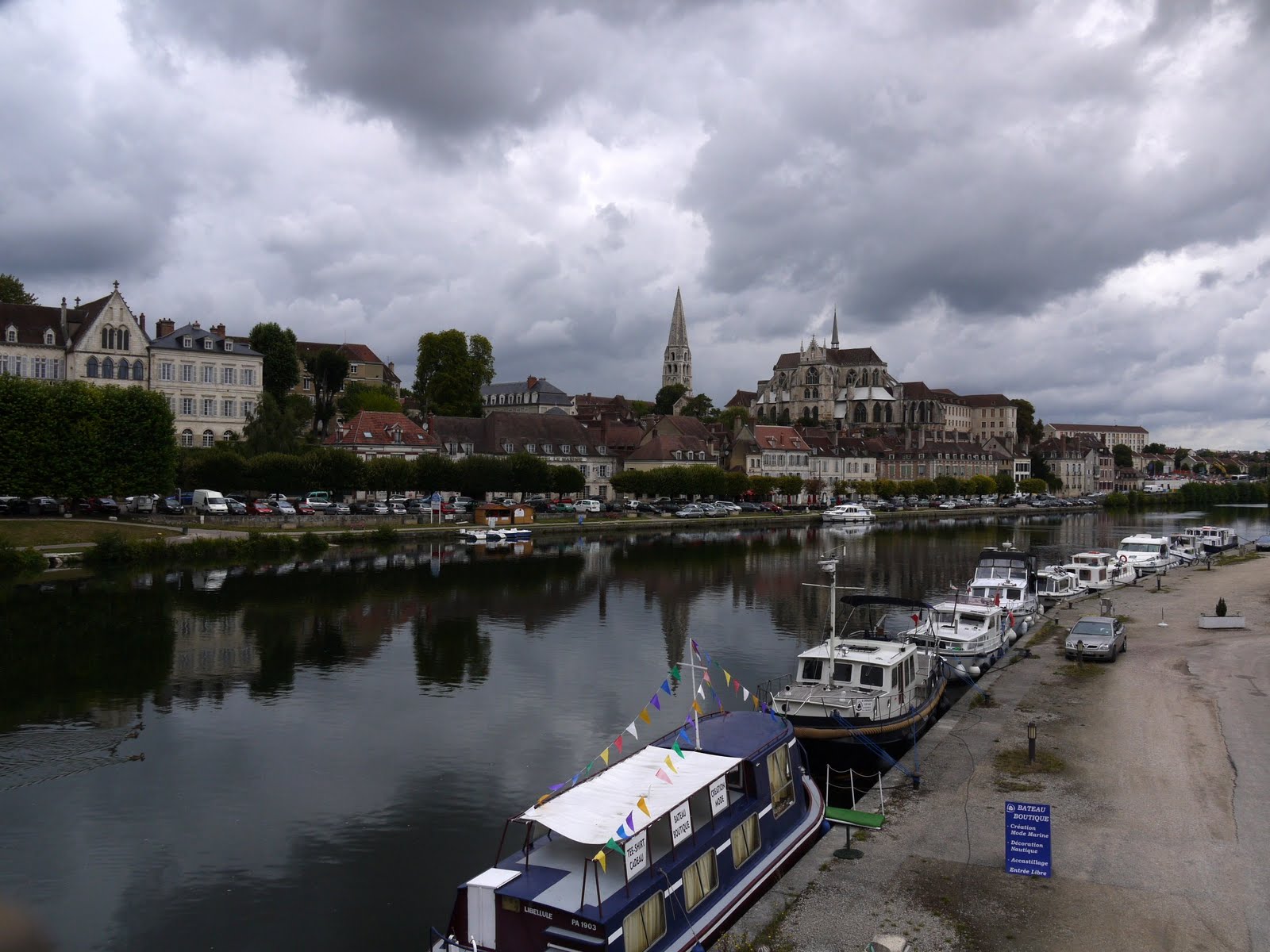
Weds 20 we wake to a wonderful view of Saint Etienne Cathedral as it rises above the terraced village of Auxerre and peers down at us across the water. After catching up with the boys via skype, we jump on our Parisian-style bikes, complete with baskets and chain locks, and head across the bridge to explore the village. Again, we are presented with delightfully narrow and steep cobblestone streets. When we reach the top of the hill we find a much bigger and thriving shopping area than we expected.

On the whole, Auxerre is much bigger than Joigny, with around 45,000 people living there. Auxerre was once prosperous during the time when the river and port was bustling with the wine trade. Now, of course, everything is transported by train or road. But it still has an air of busy-ness about it and is visited by tourists, and those who brave souls who cruise the canals every year.


Even the animals enjoy cruising the canals... 
 We realise that we are both feeling the stress of not just the day before's activities but also from our full day's traveling a few days before. We decide that we will stay put at the port as we have a good mooring and everything we need is quite handy. The weather is unsettled but warm and prone to downpours when we least expect it.


We are told this is most unusal for this time of the year when it is normally up in the 30 degree temperatures. We try to imagine how hard it would be to endure intense heat on our little boat and count ourselves lucky. We make the most of the port's washing machine which costs a hefty 6.30 euros per wash and then turn poor little Pipee into a laundry boat but she doesn't seem to mind.  


 Thurs 21 we are still in port. We decide to use our bikes to explore the canal upstream and see if we are missing out on anything. The ride is enjoyable until it rains and we are caught in the downpour. We ride two locks and around 8km later reach the small and uninteresting town of Vaux and have to ride an extra km or two to find coffee at the TAB - the only shop open for business (it is the French lunch hour - which can be up to two hours long). The locals eye us suspiciously, as if we're tourists or something - us in our summer shorts, jackets and helmets.


On our ride back, we are in time to watch a big passenger boat come into the canal - it just fits. The lock keeper, a young girl, shakes her head and has a frown on her forehead.

There are 77 people on board, she says, this is bad. Presumably she is concerned that something may happen and feels responsible for all the people on the boat. No doubt, she would have been happier had they all just got off and walked to the banks beyond the lock and re-joined the boat there.

On our way back, we take a photo of another boat coming through the locks. The captain, with a French accent, stops to speak to Max and when he tells him we are Kiwis, the man laughs and says, so are we!

Another boat we come across has difficulty fitting in the lock and the captain has to pull up his fenders to squeeze in .

Back at Auxerre we are crossing the foot bridge over the river and see our new kiwi friends' boat come through and give them a big welcome. Later in the evening, two young girls appear at our boat and we are invited to join these new kiwis for drinks before they head out for a meal. They turn out to be Chris Dixon, ex America's Cup skipper, and his family, including his dad!

Later in the evening, we hear country style music drift across the river - coming from a restaurant and bar - it's sounds pretty good to us and most are songs we know. By strange contrast, in the background to this modernity, we hear church bells peel with old-fashioned determination to be heard above this music - a most unusal combination indeed!

Frid 22 sees us still in port. It rains overnight and we wake up to another murky day. Well, says Max a little over-brightly, we're all in the same boat. You're so right!

However, the day improves and the sun does appear between showers so we explore the wider village of Auxerre on our bikes. It's much bigger than we realise and, of course, quite hilly. It has a train station, psychiatric hospital, courts and other large industry. And it is, of course, in the heart of the Bourgogne wine district and is world-famous for its Chablis wine, which is grown within the district.

Sat 23 we wake to a better day and prepare to leave the marina and head back down the river and canal towards Joigny. We are both a bit tense about the trip but have been told that going down the locks is so much easier. We are hopeful.

We aim for Augy for lunch. Coming down the locks is a breeze compared to going up. Each lock feels better than the last and finally we start to relax and enjoy the journey. We even have three swans come through one lock with us. Coming down a lock means I step easily off onto the stone siding, hook the ropes around the bollards and then step back onto the boat, to hold her steady as the water drains away until we are level with the next part of the canal. All in a very lady-like way!


Fishermen camp out along the river banks in hope
of catching a big fish - hope its tastes good!
We dock for the night at La Roche St Cydroine, a bit of a village, and freedom  moor for the night. Max finds a local boulangerie and gets his 'tarte' fix for the evening, and raves about having been served by a lovely young French lady. He insists he will go back in the morning for fresh bread and I suggest he will probably be served by her mother or grandmother.

The evening brings black clouds, thunder and rain but we huddle in and make the most of our second last night on board our little Pipee.

Sun 24 we head into the neigbouring village, Migennes, to visit the local market but we don't find it anywhere. So instead, we investigate the lock that introduces boaties to the Canal du Bourgogne. It's not big length-wise but it is incredibly deep from our side of the river Yonne.

We guestimate Laroche Migennes is at least five metres deep and indeed are told stories of other canal boaties circling around for ten minutes before getting the nerve to go into it's stone clutches. We also discover, on the topside of the lock, another canal boating company and take a closer look on board. Le Boats offer upmarket boats ut at a higher rental price.

Back at the boulangerie, Max makes his move to buy a baguette for lunch and is served by none other than his lovely French young lady's - grandmother... serve him right, I say!

Just two more locks and we are back in Joigny, just in time before the lock keepers take their lunch break. Not surprisingly, we are one of the first boats back from the seven day 'in and out' cruise. All boats have to be back in port before 9am in the morning. And considering the locks close at 7pm at night and don't open again until 9am, all boats need to back in the night before so as not to incur extra charges.

Inquisitive ducklings visit us at port...
As the day wears on, other boats start to drift into port. It soon becomes apparent that not all come back in the same condition they left in. One large boat has had its rubber bumper strip torn and it protrudes awkwardly from the side of the boat, while another has a rubber strip completely missing. One captain just shrugs his shoulders and says, it's nothing! The fact that everyone arrives back in one piece is all that matters.

The young Belgium boy comes to collect his flag and his father assures us that he has talked about nothing else since we met him a week ago. The boy goes away with a big grin on his face.

The bikes come in handy when we need
to dry off some underwear!
Mon 25 it's an early start to get to the train station after a breakfast of croissants and the last of the jam (from the Mecure hotel). We also discover, much to their disappointment, that Jared and Sarah haven't got away on their planned honeymoon to Raratonga. It has snowed in Christchurch, indeed throughout New Zealand, and after a two-hour wait at the airport, their flight is cancelled. They decide to rebook for October, somewhere around the time we come home. (They have since added to their family with a new SPCA puss called Jackson)
We catch our train to Paris, excited to be back in the big bustling city for one more night. What's more, Jane and Steve are on their way to Paris for a couple of nights and will stay in the same hotel as us.

This dog finds the Paris heat just
too much...

It's hot back on the Parisian streets but that does not deter us from some last minute shopping, so we find our way to the river Seine and then tread all our old haunts. There are even more soldes signs out. Later in the evening, we meet up with Jane and Steve and saunter back towards the river, with dinner on the way at a small restaurant where Max and I had enjoyed coffee earlier in the day.


From July to August, Parisians can enjoy the beach
beside the river Seine, when the street is closed to
traffic and opened to beach lovers.


We even get the same waiter, still wearing his cream and black boater-style hat. I am again captivated by his style as he waits on his customers with a certain flourish that you only see in France. When he delivers drinks in a bottle, he pulls a bottle opener out from his back pocket and with a measured twist of his wrist, he eases the bottle top off. I watch him do this for several customers, giving each one his special attention. He also speaks English, which is helpful.

Flowers bring added colour and life
to the city of Paris...
After dinner, we wander the streets. In Paris, the last thing you want to do is go to bed too early. So we join a crowd to watch some street performers on the bridge beside the Notre Dame Cathedral, somewhere around midnight, then decide we really should go back to the hotel. But on the way, we stop for a nightcap - it's really just another good excuse to avoid giving in to our last night in Paris.

Early morning and we are in a taxi, racing through the streets of Paris towards Gare de Bursey. It's 7.30 and the city is awake - she slumbers for just a few short hours each night.

Horns toot. Fingers drum on steering wheels. Get a move along - the light has changed to green. Drivers start their day as they mean to carry on, while bleary-eyed city folk, on their way to work, wait patiently or perhaps wearily at pedestrian crossings.

Eventually, we are on the Eurostar and gliding our way across the countryside, slipping through the chunnel and back to England. We leave with a tinge of sadness and mixed emotions. France has been kind to us, even the native French did their best to communicate with us. And we got along fine, despite our language barriers and strange little pronounciations.

To say we'd love to come back to France is an understatement, we'd be back in a heartbeat.


Au revoir mon amour…. jusqu'à ce que nous retournions...

 Goodbye my love... until we return...